

How the Safe and Sound Protocol Can Support Long Covid Recovery
Updated: Sep 22
Many people who recover from COVID-19 continue to experience symptoms months after the initial infection. This condition, known as Long COVID, can shut down daily life and wellbeing. Among its many effects, Long COVID often impacts the autonomic nervous system, causing fatigue, dizziness, cognitive decline and irregular heart rates. The Safe and Sound Protocol (SSP) offers an approach to help restore balance to the nervous system and ease these symptoms.

What Happens in Long COVID
COVID-19 is so much more than a respiratory illness. It can affect multiple organs such as the heart, kidneys, and digestive system. The virus triggers an immune response that sometimes leads to inflammation in the vagus nerve and central nervous system. These nerves regulate many automatic body functions like heart rate and digestion.
For some individuals, symptoms persist beyond the typical recovery period. Research suggests that Long COVID may result from the virus reactivating dormant viruses in the body or causing an excessive inflammatory response. This inflammation can damage nerves and muscles. In some cases, the immune system mistakenly attacks healthy cells, worsening symptoms.
How Long COVID Affects the Nervous System
Upon detecting a virus, your body perceives the infection as an immediate threat to survival. The nervous system automatically triggers primitive defense mechanisms to protect you, either shifting into active survival (fight or flight) or conserving energy through immobilisation (collapse, shutdown, or dissociation).
A common complication of Long COVID is Dysautonomia, a disorder of the autonomic nervous system (ANS). The ANS controls involuntary functions such as:
Heart rate
Blood pressure
Digestion
Temperature regulation
When Dysautonomia occurs, these functions become irregular. Symptoms often include:
Dizziness and lightheadedness
Rapid heartbeat (tachycardia)
Extreme fatigue
Cognitive difficulties such as confusion
Another related condition is Postural Orthostatic Tachycardia Syndrome (POTS). POTS causes the body’s fight-or-flight response to stay active even without danger. This leads to a fast heart rate and high blood pressure when standing, making rest and recovery difficult.
People with Long COVID are more likely to develop POTS. This connection highlights the importance of addressing nervous system health in recovery.
How can the Safe and Sound Protocol help in Recovery?
The Safe and Sound Protocol (SSP) is a therapeutic method designed to improve nervous system function. It uses specially filtered music to stimulate the vagus nerve, which plays a key role in regulating the autonomic nervous system.
The SSP aims to:
Reduce stress and anxiety
Improve heart rate variability
Enhance social engagement and communication
Support better regulation of bodily functions
Improved HRV ( heart rate variability)
By targeting the nervous system directly, SSP offers a non-invasive way to help people with Long COVID manage symptoms related to Dysautonomia and POTS.
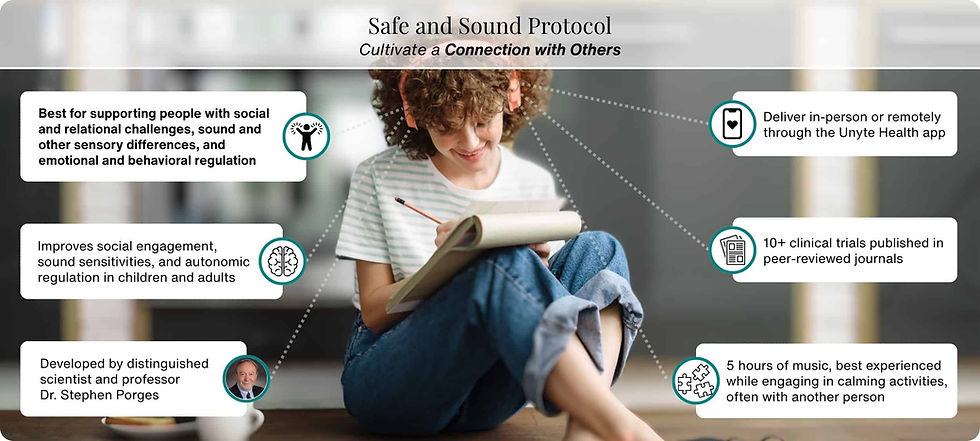
How the Safe and Sound Protocol can effect Long COVID
The SSP works by playing music that contains specific frequencies and modulations. These sounds encourage the vagus nerve to function more effectively. Improved vagal tone helps balance the autonomic nervous system, which can reduce symptoms like:
Fatigue
Dizziness
Rapid heartbeat
Insomnia
Anxiety and Depression
People who have tried SSP report feeling calmer and more focused. Some also notice better sleep, less fatigue and cognitive issues. While research on SSP for Long COVID is still emerging, early evidence and clinical experience suggest it can be a valuable part of a recovery plan.
"SSP was one of the few things I have done that made a lasting and positive difference to my health over the past five years. Over time I found it helped calm my nervous system, leading to a more relaxed state in which my body could heal. It helped me to find connection with other people which had become extremely difficult due to sickness. SSP is a powerful therapy, and at some points in my illness I found it was very easy to do too much. Michelle and SSP together have been an integral part of my slow but steady recovery. Today I am not 100% cured but I am in a completely different place to where I was when I began." Long COVID
Practical Steps for Those with Long COVID
If you or someone you know is struggling with Long COVID symptoms, consider these steps:
Consult a healthcare provider to rule out other causes and discuss symptoms. It is always useful to check Ferritin, Vit D, Electrolytes, B12 and Thyroid function amongst others.
Explore therapies that support the nervous system, such as SSP, under professional guidance.
Find a practitioner who will support you long term and can make their service accessible to your needs, i.e shorter sessions, different times and sensory imput.
Maintain a balanced diet with easy to digest food, stay hydrated to support overall health. Look at food triggers.
Practice gentle physical activity when you can to improve circulation and energy. Use the spoons technique. Every activity takes a certain number of spoons and some days are no spoon days. Once the spoons are gone energy is depleted.
Deal with you emotional stress as this can be exhausting and keep your body in a fight or flight state. Journal all your anger, rage and upset if you can.
Use stress-reduction techniques like mindfulness, yoga, breathing exercises and EFT.
Nervous system therapies like the Safe and Sound Protocol (SSP) can restore balance and improve your quality of life. To navigate this journey safely, it can be really helpful to find a consistent practitioner who can support your pacing needs.
Michelle Doubtfire is a BACP Registered Psychotherapist, Trauma Therapist, Safe and Sound and Rest and Restore Practitioner.
For further support and information please contact www.thesafetytherapist.com and www.safesoundconnected.com


Comments